Poland's Mountain Escape
Mukesh Kumar
| 30-04-2026
 · Travel Team
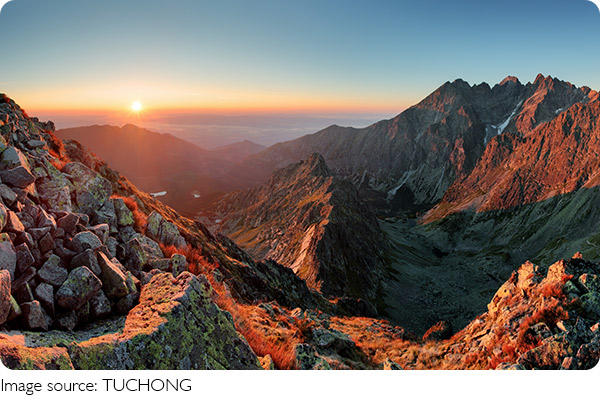
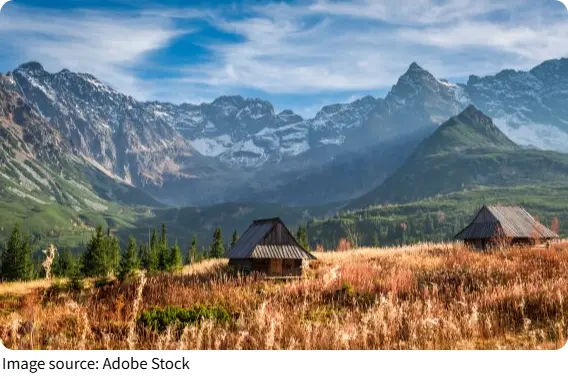
The wooden houses have carved balconies and steep shingled roofs designed to shed heavy snow. The main street smells like grilled sheep's cheese and woodsmoke from a dozen open stalls. In every direction, the Tatra peaks rise sharply above the treeline, jagged and snow-covered, looking almost too dramatic to be real.
Zakopane sits at about 850 meters above sea level in the very south of Poland, pressed right up against the Slovakian border, and it has been drawing travelers, hikers in summer, skiers in winter, everyone in between, for well over a century. Once you understand what it offers, it's genuinely hard to understand why more people outside Europe haven't heard of it.
What Makes Zakopane Special?
It's the combination that gets you. Most mountain resort towns offer scenery and winter sports and not much else. Zakopane layers on top of that a genuinely distinct regional culture — the Górale highlander tradition, with its own dialect, music, embroidered costumes, and woodcarving craft that shows up everywhere from the architecture to the market stalls. The wooden villas scattered throughout town, many dating from the late 19th and early 20th century, have a style called Zakopane Style — ornate carved facades, steep rooflines, intricate geometric patterns — developed specifically here and found nowhere else. Walking through the older neighborhoods feels like exploring an open-air museum that people actually still live in.
Things to Do Year-Round
In winter, the slopes around Kasprowy Wierch and Gubałówka hill handle everything from beginner runs to serious descents, with ski pass prices that feel almost unreasonably cheap compared to the Alps. In summer and autumn, the Tatra National Park offers some of the most rewarding hiking in Central Europe — trails to Morskie Oko lake, a stunning glacial lake surrounded by peaks, draw thousands of walkers daily, but early morning arrivals find it peaceful and extraordinary. The Krupówki pedestrian street running through the town center is the social hub year-round, lined with restaurants, stalls selling oscypek (smoked sheep's cheese), and craft vendors.
Getting There
Zakopane is about 100 kilometers south of Kraków. The easiest route is by bus — frequent PKS and private minibus services run from Kraków's main bus station directly to Zakopane, taking about 2 hours and costing around $5–$8 each way. Kraków itself is well connected internationally, with direct flights from most major European cities and connections from further afield. Renting a car in Kraków and driving south is also straightforward and gives you flexibility to stop at smaller villages along the way.
Zakopane
Practical Info and Costs
• Tatra National Park entry fee: around $1.50 per person per day
• Kasprowy Wierch cable car: $20–$25 round trip
• Ski day pass: $30–$45 per day depending on season
• Morskie Oko hiking trail: free, about 9km round trip from the car park
For accommodation in Zakopane:
• Traditional guesthouse (pensjonat): $40–$70 per night
• Mid-range hotel in town center: $75–$120 per night
• Mountain chalet rental: $90–$160 per night
Eating out is very affordable — a full meal at a local restaurant runs $8–$15 per person. Try the grilled oscypek with cranberry jam, and lamb dishes that are a Górale specialty.
Why It Stays With You
Zakopane doesn't try to be the Alps. It doesn't need to. The mountains are wilder and less groomed, the town is rougher around the edges, the food is hearty and unpretentious, and the prices make you feel like you've found something the rest of the world hasn't caught up with yet. Whether you come for the skiing, the hiking, the architecture, or just to sit in a wooden restaurant with a bowl of hot soup while snow falls outside, Zakopane delivers every single time.
It's the kind of place that goes straight onto the "come back" list the moment you leave.